CANADA – PR PATHWAY
Canada PNP Program
The Provincial Nominee Programs (PNPs) are immigration routes that enable Canadian provinces and territories to select individuals who align with their unique labor market and economic requirements for permanent residency. These initiatives empower individuals to establish themselves in a specific province or territory by their skills and professional background which will strengthen your application with additional or extra points.
To be eligible for permanent residency under a provincial nominee program, individuals must fulfill the specific criteria established by the province or territory. Each program outlines its own set of eligibility requirements, which may encompass factors such as:
Work Experience: Candidates might be required to possess relevant work experience in a specific occupation or industry that is in demand within the province or territory.
Education: Certain PNPs may stipulate educational prerequisites, such as a minimum level of education or specific credentials.
Connection to the Province/Territory: Some PNPs prioritize candidates with authentic ties to the province or territory, which could include having a job offer from an employer in the region, prior work or study experience in the province, or familial connections.
Language Proficiency: Proficiency in English or French is often mandated, and applicants may be asked to provide valid language test results.
Provincial Nominee Programs (PNPs) offer distinctive benefits that attract individuals seeking permanent residency in Canada. Here are some reasons why people opt for PNPs:
- Tailored Opportunities: PNPs are tailored to meet specific labor market needs, offering avenues for individuals with sought-after skills and experience in the province or territory.
- Lower CRS Requirements: Some PNPs set lower Comprehensive Ranking System (CRS) score thresholds compared to the Express Entry system, making it more accessible for individuals with lower CRS scores to receive nominations for permanent residency.
- Specialized Nomination Streams: Certain PNPs feature specialized nomination streams designed for individuals with specific qualifications, such as international graduates or entrepreneurs, presenting additional routes to permanent residency.
Here are some recommendations for Provincial Nominee Programs (PNPs) applicants:
- Thoroughly research and comprehend the particular eligibility criteria, nomination pathways, and prerequisites of the PNP that piques your interest.
- Match your skills, professional experience, and credentials with the labor market demands of the province or territory.
- Verify that all documentation and details submitted in your application are precise, comprehensive, and current.
Stay abreast of any modifications or revisions to the PNP criteria by regularly checking the official websites of the relevant provinces or territories.

Click below to access the latest information on visa options, eligibility requirements, application processes. CLICK HERE
Canada – Rural & Northern Immigration Pilot (RNIP)
The Rural & Northern Immigration Pilot (RNIP) is designed to address labour shortages in rural and northern communities by offering a pathway to permanent residency for qualified individuals. The program generally accepts applicants up to the age of 50 years. To qualify, candidates must meet several community-specific criteria, including securing a legitimate full-time, non-seasonal job offer from an employer within one of the participating communities, with wages at or above the prevailing rate. Additionally, applicants should have at least one year of continuous full-time work experience (or equivalent part-time experience) in a relevant occupation obtained within the past three years. Language proficiency is also essential, with applicants needing to demonstrate their skills in English or French by submitting valid language test results, typically requiring an overall IELTS score of at least 5.0. These criteria aim to ensure that candidates are well-prepared to contribute to these communities while fulfilling the program’s labour market needs.

Click below to access the latest information on visa options, eligibility requirements, application processes. CLICK HERE
Canada – Agri-Food Immigration Pilot Program
The Agri-Food Pilot is a pathway to permanent residency in Canada for workers in the agri-food sector. It is designed for individuals up to 50 years of age with an IELTS score of 5.0. To be eligible, applicants must have a full-time, non-seasonal job offer from an eligible employer in a designated occupation within the agri-food sector and at least one year of full-time, non-seasonal work experience in Canada in an eligible role within the past three years. While there are no strict educational requirements, relevant education or training can strengthen the application.
The application process involves securing a job offer, gathering supporting documents (including proof of work experience, language proficiency, and education), completing the application forms, and undergoing medical and security checks. Once all steps are completed, applicants can submit their application to IRCC for consideration.
Click below to access the latest information on visa options, eligibility requirements, application processes. CLICK HERE
Canada – Home Child Care Provider Pilot or Home Support Worker Pilot
The Home Child Care Provider Pilot and Home Support Worker Pilot are pathways for qualified caregivers to attain permanent residency in Canada. These programs are designed for individuals up to 50 years of age with an IELTS score of 6.0. To qualify, applicants must have at least 24 months of full-time (or part-time equivalent) work experience in Canada within the past three years as a home childcare provider or home support worker, gained through the Temporary Foreign Worker Program or the Live-in Caregiver Program. While relevant education or training can strengthen the application, there are no strict educational requirements.
The application process involves gathering supporting documents (proof of work experience, education, and language proficiency), accurately completing the application forms, undergoing medical and security checks, and submitting the application to IRCC. IRCC will review and process the application to determine eligibility for permanent residency.

Click below to access the latest information on visa options, eligibility requirements, application processes. CLICK HERE
Canada – Quebec Selected Workers (QSW) program
While not officially designated as a pilot program, the Quebec Skilled Worker (QSW) program stands out as an exclusive initiative within the province of Quebec. It offers an alternative route for skilled workers seeking permanent residency in Quebec, featuring distinct selection criteria and processing protocols.
To be eligible for permanent residency under the QSW program, applicants need to satisfy specific eligibility criteria, which might include:
- Education: Candidates must have attained a recognized diploma or degree that meets Quebec’s educational standards. The field of study should be pertinent to Quebec’s current job market demands.
- Work Experience: Applicants must possess work experience in a skilled occupation that aligns with Quebec’s labor market This work experience should have been acquired within the past five years and must meet Quebec’s specified minimum requirements.
- Language Proficiency: Candidates must exhibit proficiency in French, as it serves as the primary language in Language assessments, such as the Test d’évaluation de français (TEF), are typically required to evaluate proficiency levels.
The process for applying for permanent residency under the QSW program typically follows these steps:
- Obtain Quebec Selection Certificate (CSQ): Applicants need to submit their application to Quebec’s immigration authorities (Ministère de l’Immigration, de la Francisation et de l’Intégration – MIFI) and await approval. Upon approval, they receive a Quebec Selection Certificate (CSQ), confirming their eligibility and selection for immigration by Quebec.
- Submit Application to Immigration, Refugees and Citizenship Canada (IRCC): With the CSQ in hand, applicants proceed to submit their permanent residency application to IRCC. This submission includes providing supporting documents, undergoing medical examinations, and completing security checks.
- Processing and Decision: IRCC reviews the application, conducts the necessary assessments, and ultimately renders a decision on the permanent residency application.
 Click below to access the latest information on visa options, eligibility requirements, application processes. CLICK HERE
Canada – The Economic Mobility Pathways Pilot (EMPP)
The Economic Mobility Pathways Pilot (EMPP) is a Canadian initiative designed to provide refugees with opportunities for economic mobility by allowing them to utilize their skills and qualifications to access existing immigration pathways. The pilot includes administrative measures to help address the challenges refugees face due to displacement. This expansion of EMPP represents the initial phase of the pilot program. IRCC has recognized that skilled refugees can also qualify for permanent residency through economic programs with assistance.
The aim of the program
It is to enhance the responsiveness of the immigration system to both Canada’s economic requirements and its humanitarian obligations. It seeks to aid Canadian employers in recruiting skilled refugees and other displaced individuals, addressing specific labor shortages across various sectors such as healthcare, Information Technology, Mechanical and Electrical Engineering, as well as roles like drivers. Canada plans to expand this initiative in the coming years, welcoming an additional 2000 eligible refugees and other individuals.
Eligibility:
- Provide evidence of current refugee status through an approved organization by IRCC or obtain a “trusted partner referral letter” from a recognized partner.
- If applying under the job offer stream, present a job offer letter from a Canadian company or organization; not required under the no job offer stream.
- Qualify for one of the economic immigration programs, such as the Atlantic Immigration Program (AIP), Provincial Nominee Program (PNP), or Rural and Northern Immigration Program (RNIP).
Fulfill the necessary requirements for the respective program, with certain exceptions.
 Click below to access the latest information on visa options, eligibility requirements, application processes. CLICK HERE
Canada – The Atlantic Immigration Program.
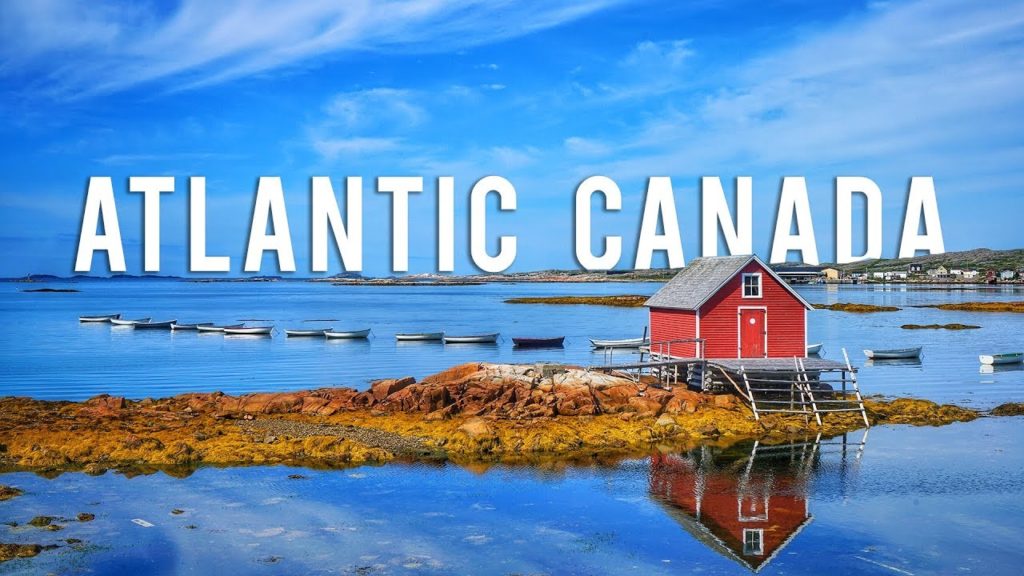
The Atlantic Immigration Program (AIP) is a joint effort between the Canadian federal government and the Atlantic provinces, including Newfoundland and Labrador, Prince Edward Island, Nova Scotia, and New Brunswick. Its objective is to fulfill labor market demands and foster economic growth in the Atlantic region by enticing skilled workers and international graduates to establish permanent residency in these provinces.
To be eligible for permanent residency under the Atlantic Immigration Program, candidates must fulfill specific criteria outlined by the participating provinces. These criteria typically include:
- Obtaining a job offer from a designated employer in one of the four Atlantic provinces, meeting standards like full-time employment, non-seasonal work, and prevailing wage rates.
- Possessing at least one year of relevant work experience within the past three years, aligned with the job
- Meeting minimum education requirements, which can vary based on the occupation and the province’s specific mandates.
- Demonstrating proficiency in either English or French through valid language test
The process for obtaining permanent residency under the Atlantic Immigration Program typically follows these steps:
- Secure a Job Offer: Obtain a valid job offer from a designated employer located in one of the participating Atlantic provinces.
- Apply for Endorsement: The designated employer must request an endorsement on behalf of the applicant from the respective provincial government, confirming the legitimacy and compliance of the job offer with program requirements.
- Submit PR Application: Once endorsed, the applicant can proceed to submit their permanent residency application to Immigration, Refugees and Citizenship Canada (IRCC), along with all required supporting
- Complete Medical Examinations and Security Checks: Applicants and any accompanying family members must undergo medical examinations and security checks as part of the application process.
- Decision on PR Application: IRCC reviews the submitted application, supporting documents, and conducts necessary checks before making a decision regarding permanent residency.
The program seeks to fulfill labor market demands and stimulate economic growth in the Atlantic region by enticing skilled workers and international graduates to establish permanent residency in these provinces.